


The themed event “The Glory and Dream of Entrepreneurs Building Great Universities — In Search of the Eastern Institute of Technology, Ningbo” was recently held at EIT. It was hosted by the Zhejiang Entrepreneurs Development Institute (the Zheshang think tank), Zhejiang Daily Press Group and the Eastern Institute of Technology, Ningbo (EIT), and organised by Zhejiang Entrepreneurs magazine, the Zhejiang Entrepreneurs National Council and EIT Shenzhou Business School. During the event, a delegation from the Institute visited the School, and the two sides held a discussion at the Safewell Building.
Those present included ZHOU Guohui, former Vice Chairman of the Zhejiang Provincial CPPCC (Chinese People’s Political Consultative Conference) and President of the Institute; LIU Ting, Specially Invited Member of the Zhejiang Provincial Government Advisory Committee and Vice President of the Institute; ZHANG Dongxiao, Executive Vice President and Provost of EIT and Member of the US National Academy of Engineering; and BEN Shenglin, Assistant to the President of EIT and Dean of EIT Shenzhou Business School. Experts of the Institute and representatives of Zhejiang entrepreneurs also
attended.
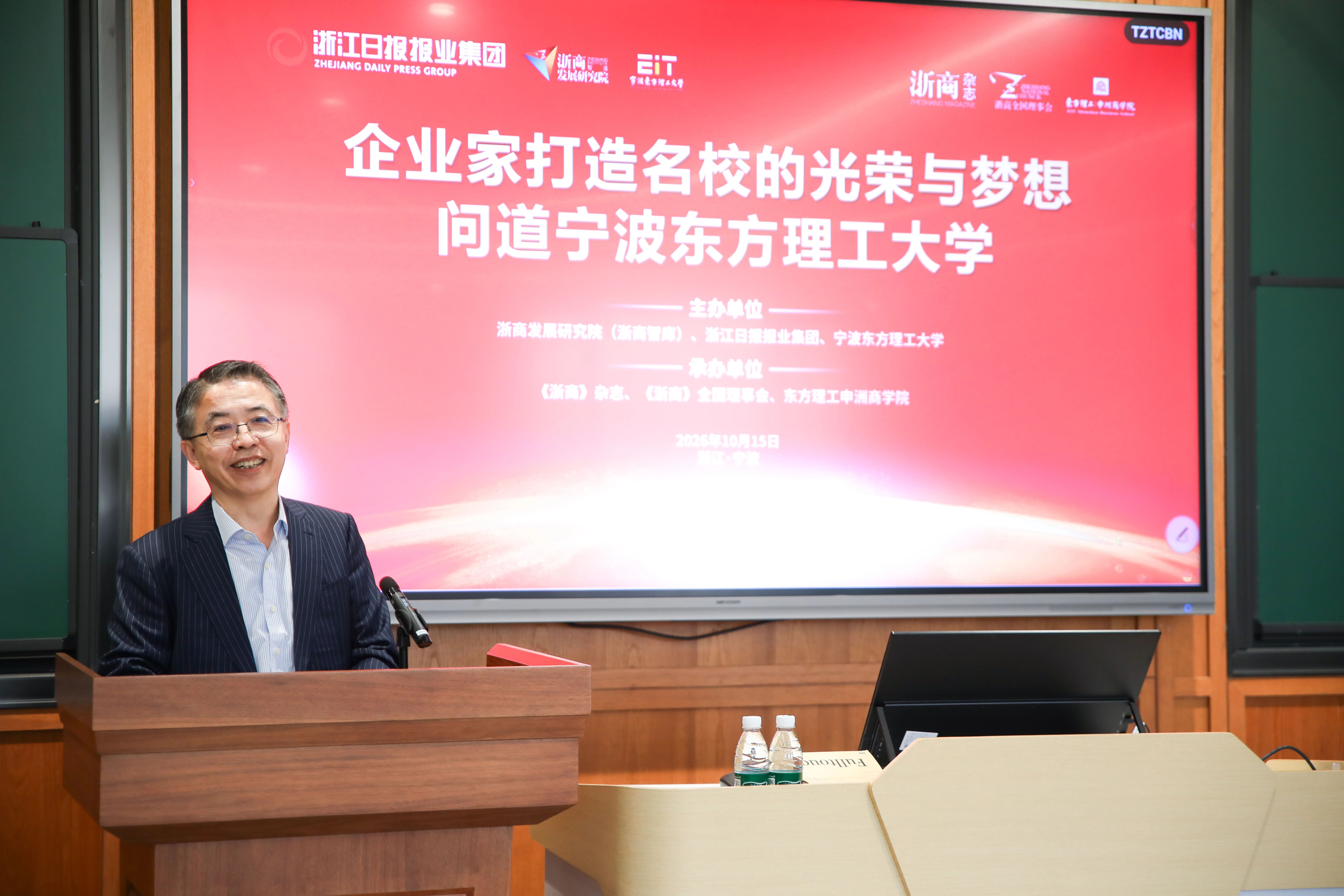
The discussion was moderated by BEN Shenglin. ZHANG Dongxiao delivered the welcome address on behalf of the university.
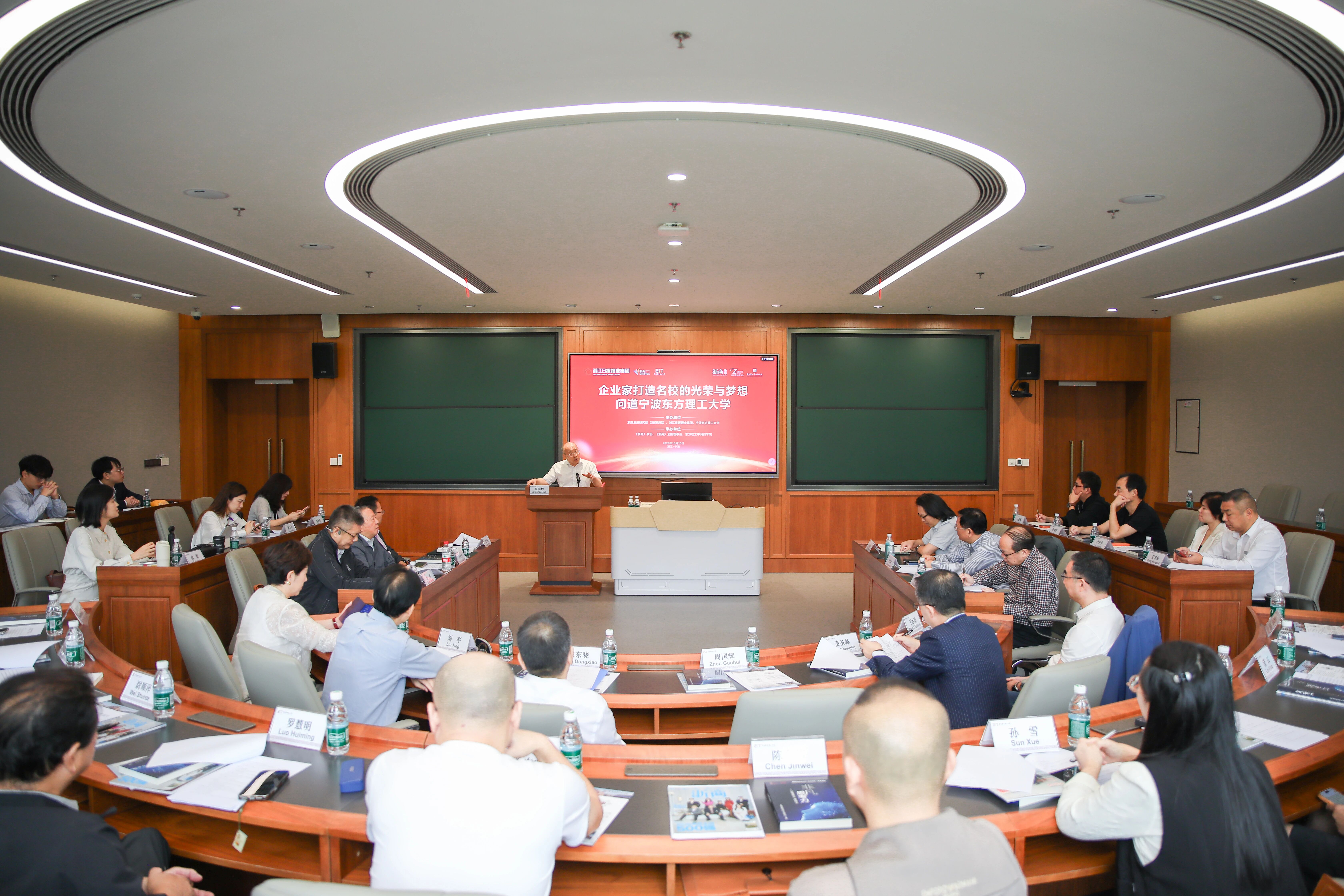
At the event
Bringing “Zheshang studies” into the classroom
In his welcome address, ZHANG Dongxiao described EIT as a new-type research university — high-standard, small-scale, innovation-driven and international — established by social forces, supported by the state and jointly built by the province and the city. Its disciplines cover science, engineering, information and business, with priority given to frontier fields such as artificial intelligence, integrated circuits, unmanned systems, new energy and new materials, intelligent manufacturing, and life sciences and health. In June 2020 YU Renrong, a Ningbo-born entrepreneur and Chairman of OmniVision Group, launched the donation-based founding plan; in June 2025 the university was approved for establishment by the Ministry of Education. Over the past five years a group of private entrepreneurs answered the call one after another — the Shengwei Building, where the discussion was held, and the Youngor Library were both funded by entrepreneurs.
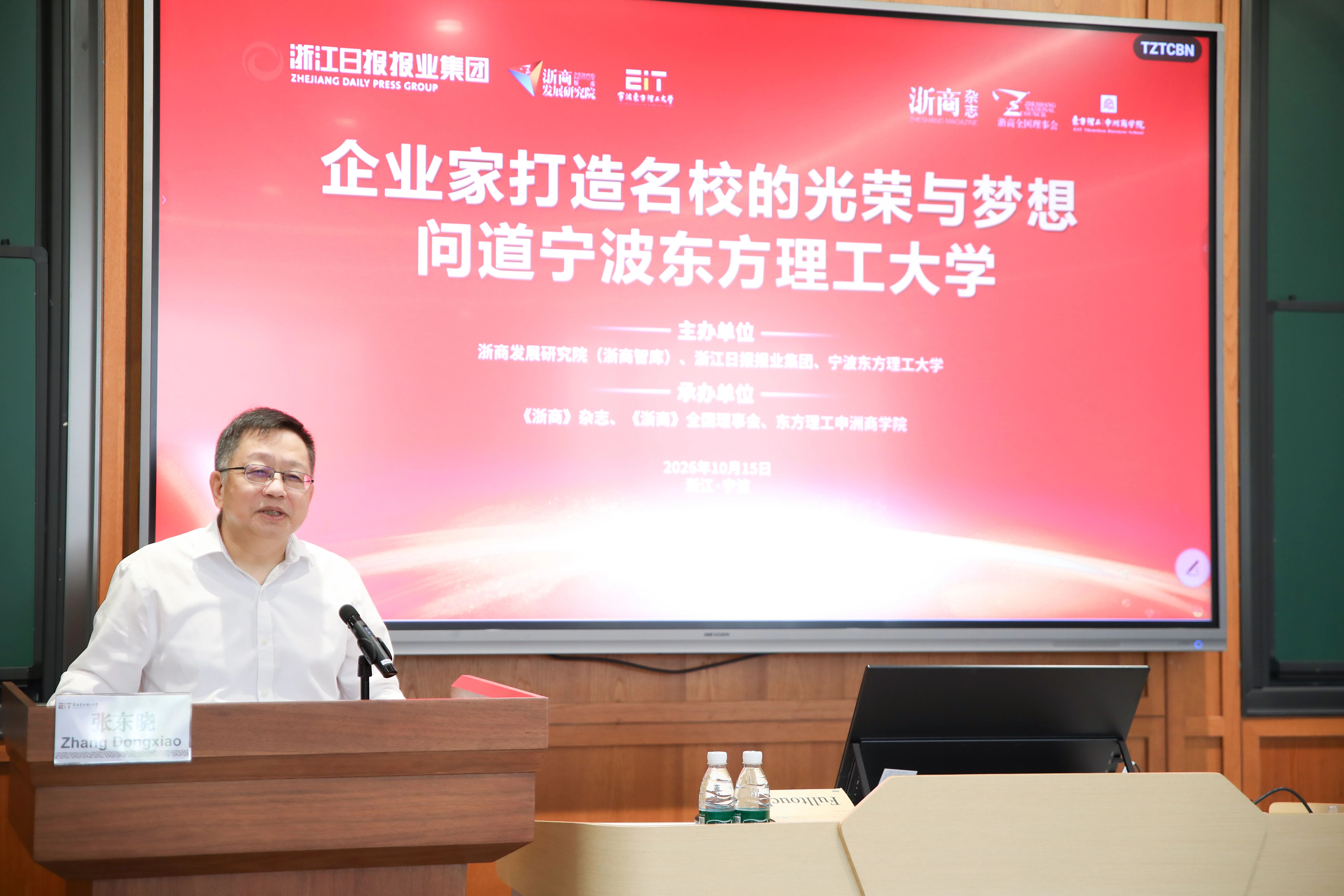
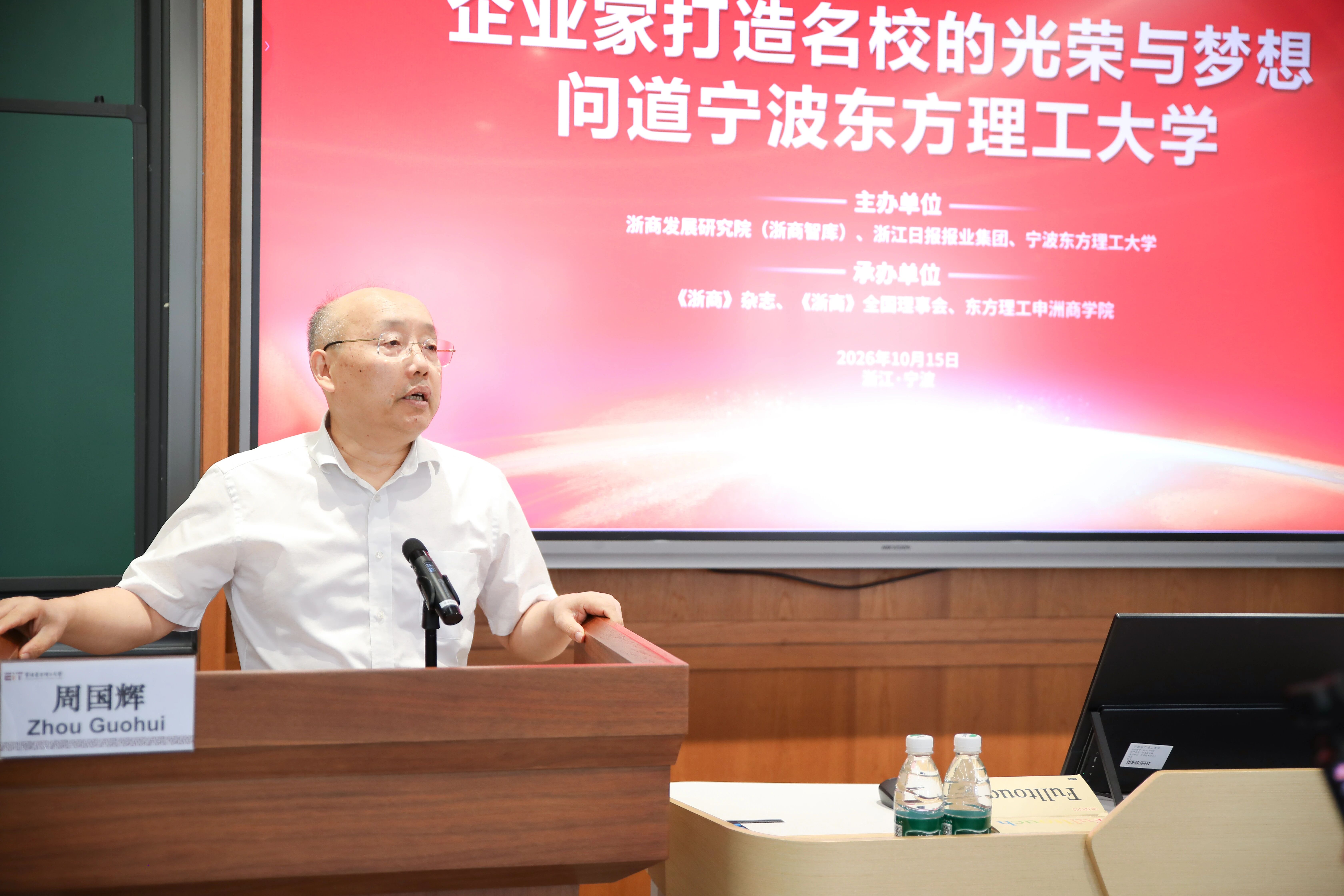
The discussion centred on building “Zheshang studies”, the reform of business education and university–industry collaboration. ZHOU Guohui said the Institute is systematically building up “Zheshang studies” along three lines — serving Zhejiang’s overall development, serving the growth of Zhejiang entrepreneurs, and carrying forward the Zheshang spirit — and is working to become a refuelling stop and a wellspring for Zheshang thinking.
“This event marks the ‘Wendao Zheshang’ series moving from factory floors to university campuses, and from industrial questions to the integrated development of education, science and technology, and talent. It opens new scenarios for Zheshang studies, offers a new model for university–industry collaboration, and adds a new vehicle for passing on the Zheshang spirit.”
ZHOU Guohui put forward six proposals for cooperation: to jointly build a new base for Zheshang studies; to jointly build a new platform for university–industry–research collaboration; to jointly cultivate top innovative talent; to jointly run the “Wendao Zheshang” brand event; to jointly bring patient capital together with hard technology; and to jointly tell the story of education for the nation and industry for the country.
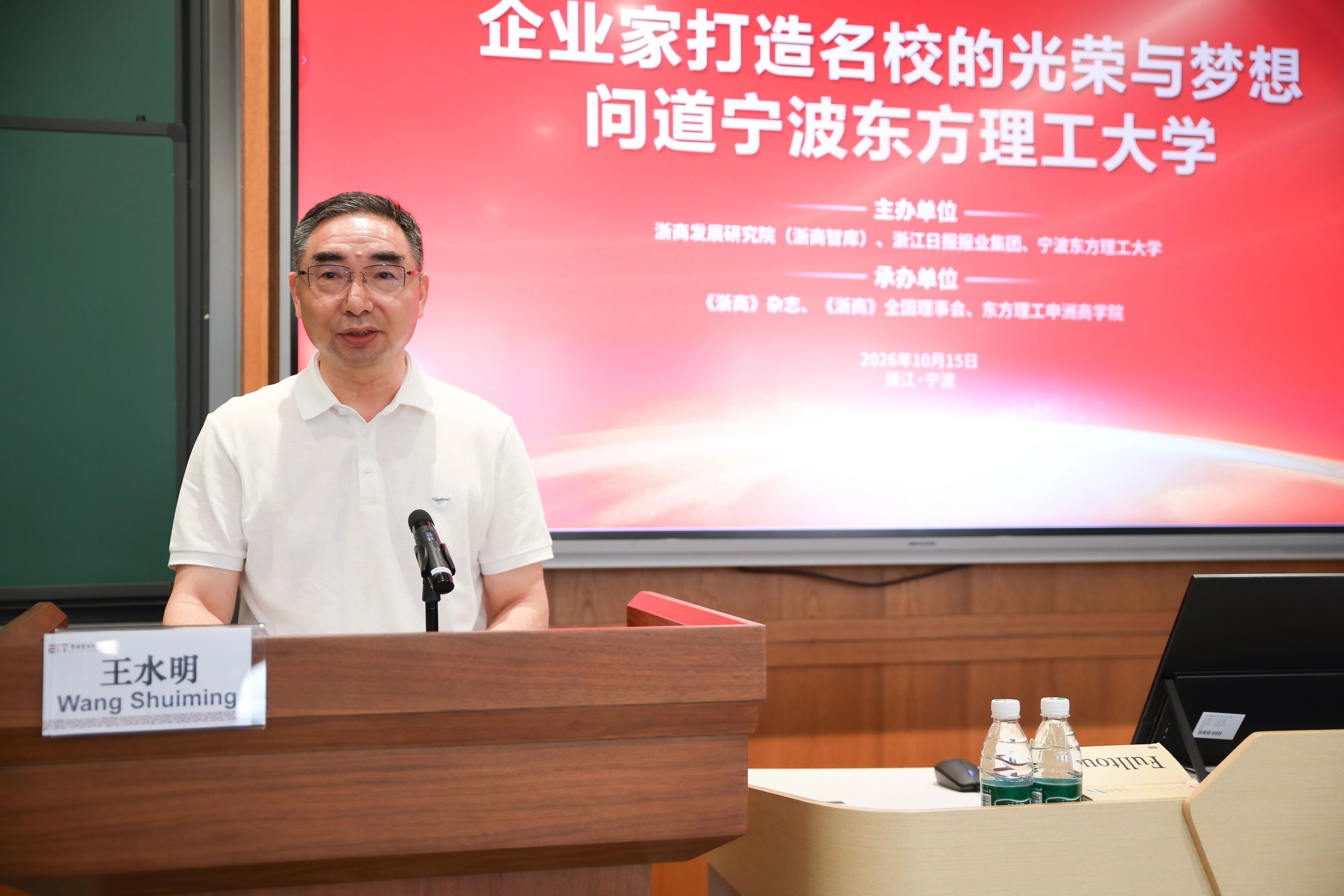
Shuiming Wang, Executive Vice President of the Institute, summed up “Wendao Zheshang” with four questions: asking about trends — how Zheshang should develop amid great change; asking about strategy — distilling the business wisdom of Zhejiang entrepreneurs; asking about the heart — carrying on the “Four Thousand” spirit of travelling a thousand miles, speaking a thousand words, trying every possible means and enduring a thousand hardships; and asking about righteousness — honouring a way of doing business that balances profit and principle. The visit to EIT, he said, was a new extension of the series.
Yongming Feng, Secretary-General of the Institute, spoke about how the event came about. “The glory and dream of private entrepreneurs building a great university can only be conceived in a great transformation, a great turning point, a great era — and EIT stands precisely in the context of such an era.” In his view, entrepreneurs who give so much to education will also enter the hall of history and of the humanistic spirit.
BEN Shenglin introduced EIT Shenzhou Business School as a school born in the AI era, free of historical baggage and therefore with greater flexibility and imagination. The School is building a business school set against the background of AI, focused on serving the globalisation of enterprises in Ningbo and across China. Positioned as “AI-native”, it acts as an intermediary and assistant connecting scientists with entrepreneurs, drives deep cross-disciplinary work between business and science and engineering, runs dual tracks of research faculty and industry professors, offers dedicated programmes for private entrepreneurs, and cultivates science-and-technology leaders who are globally minded, tech-savvy, business-astute and capital-literate.
At present the university has built more than 20 university–industry joint laboratories with leading companies such as YMTC and CATL. In August 2026 BEN Shenglin also discussed the internationalisation of Zheshang studies with scholars at Cambridge Judge Business School, working to take Zheshang thought global — and this event is that idea put into practice.
During the exchange, Hongyan Tu, Chairman of Wensli Group, paid tribute to the original aspiration of Ningbo’s entrepreneurs in founding universities. Beyond making money, she said, a greater social responsibility and sentiment lies in education: “Only when the economy and education are perfectly combined can entrepreneurs and educators join hands to realise the glory and dream of building a great university.”
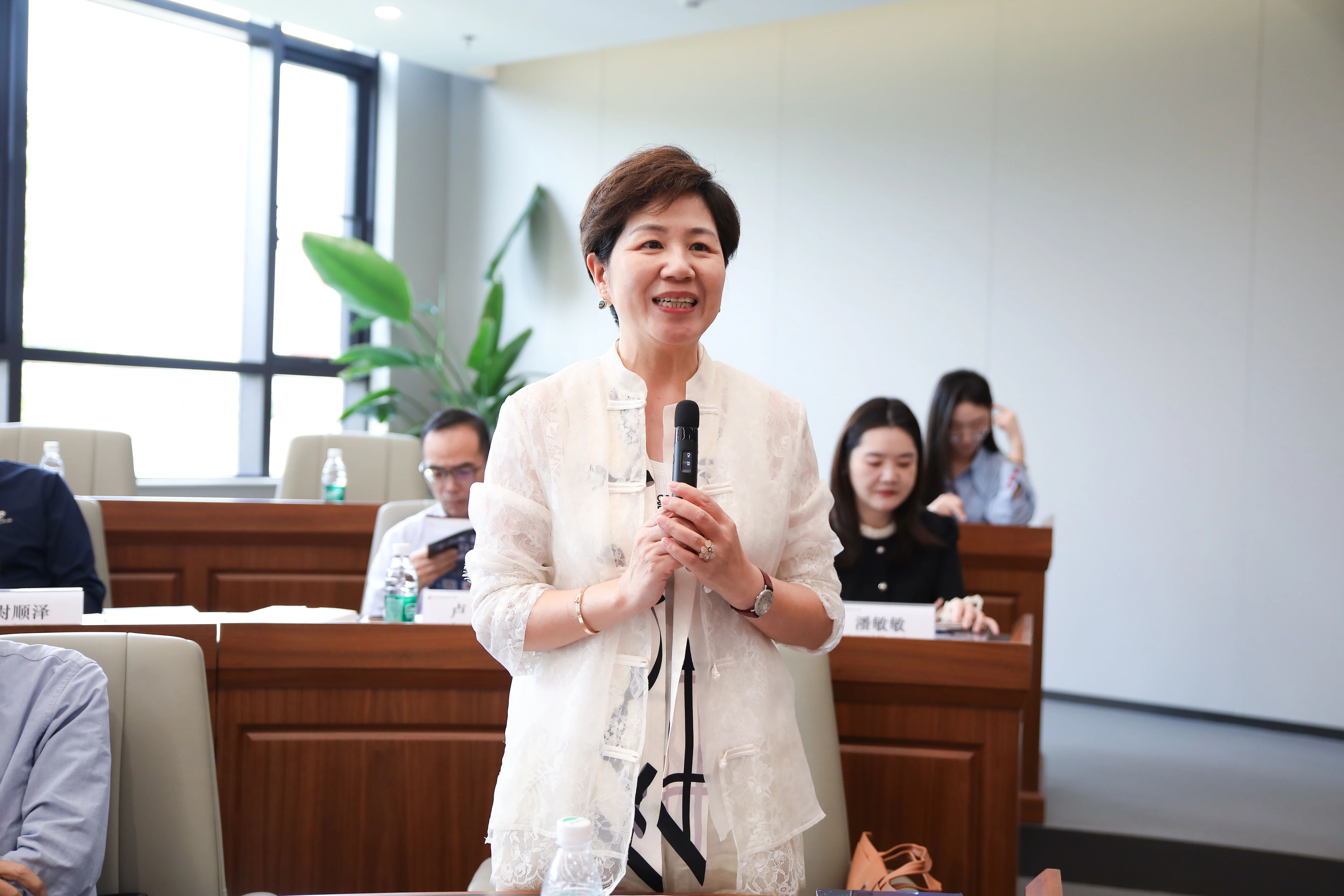
Also taking part were Xianjian Ren, Chairman of Jiurong Intelligent Control; Yinfeng Shi, Chairman of Xichu Smart Energy; Huiming Luo, Chairman of Sanhan Cutting Tools; Shunze Wei, Chairman of Beidou Union; Zhan Lu, Founder of Fengguang Zhenghao; Hong Lou, Chairman of Hongzhi Technology; Hongwei Wang, Chairman of Hongsheng Logistics; Haiyao Zhang, Chairman of Zhongzheng Apparel; and Xingyu Lu, General Manager of Xingshun Technology. They exchanged views on finding direction, technology, talent and partners.
On how “Zheshang studies” should take root, experts at the meeting proposed three things: a course that makes the field teachable, debatable and assessable; a case library that turns the decisions of Ningbo’s single-product champions, specialised “little giant” enterprises and going-global companies into teaching materials that can be searched, compared and reused; and a mechanism that brings entrepreneurs and scientists to the same table on a regular basis. The two sides also exchanged views on cultivating a new generation of entrepreneurs, succession between generations, and companies going global. Many private entrepreneurs in Ningbo stand at the intersection of taking over and going global; what to inherit, and how to go global, are real questions unfolding right now.
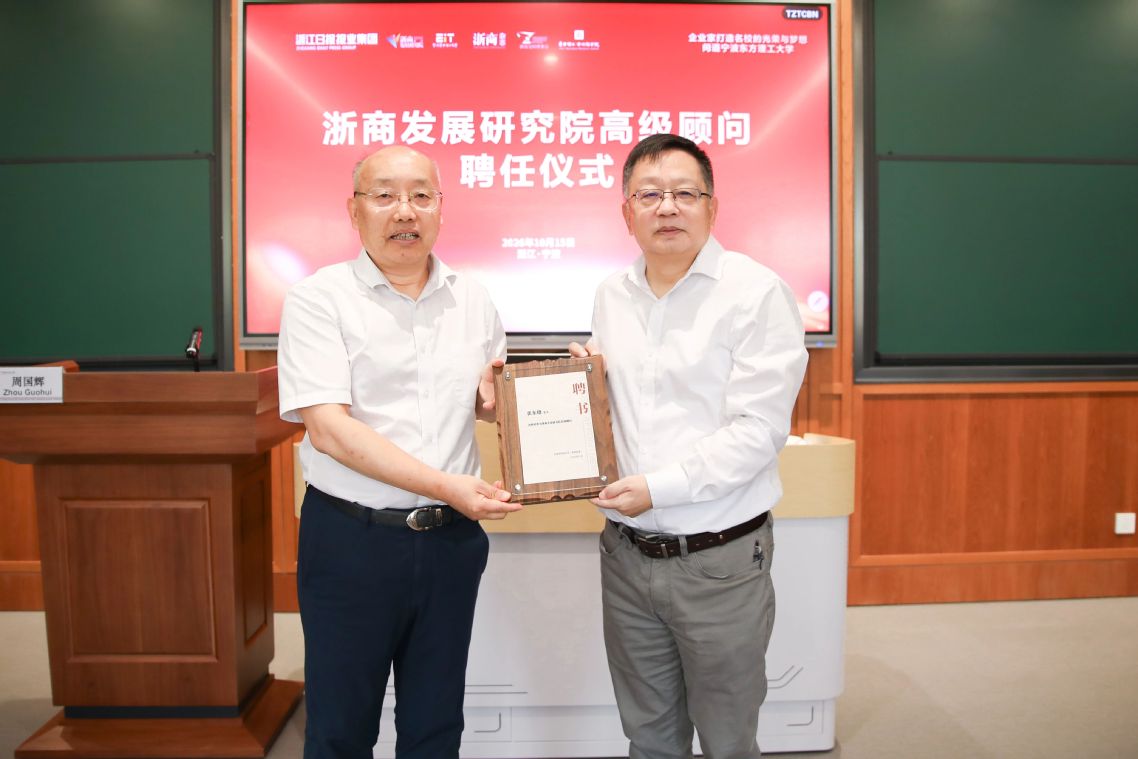
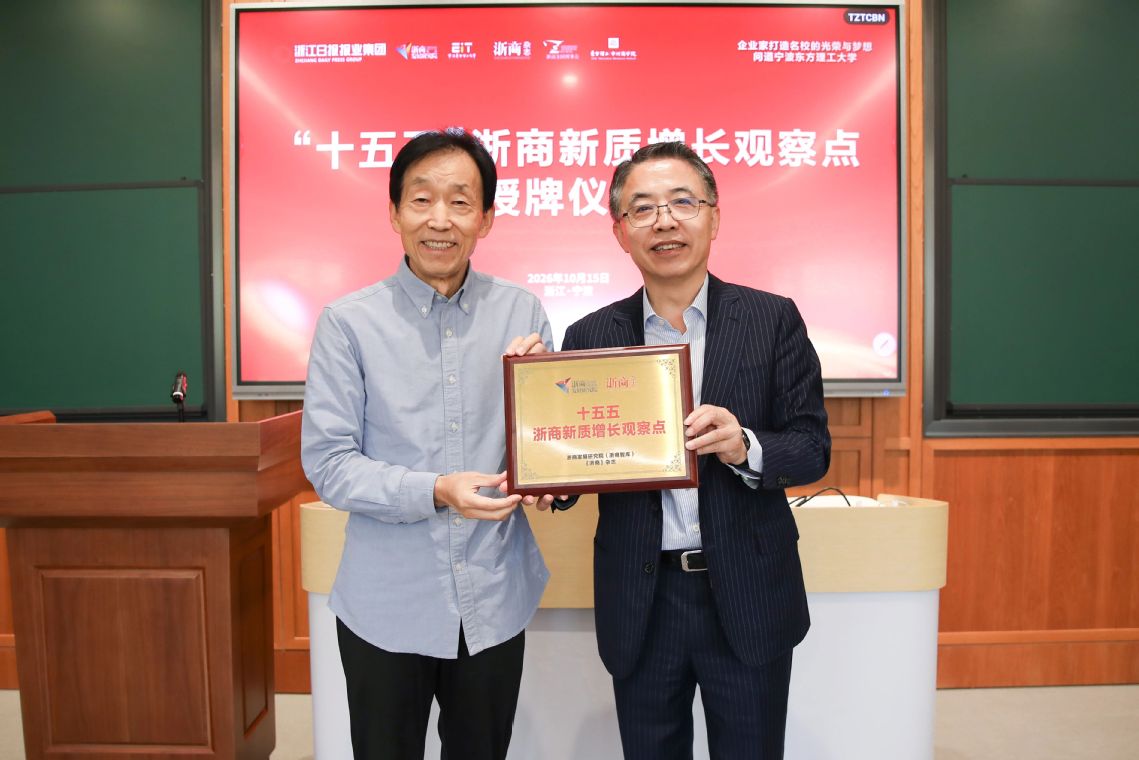
During the discussion ZHOU Guohui presented ZHANG Dongxiao with a letter of appointment as Senior Advisor to the Zhejiang Entrepreneurs Development Institute, and LIU Ting awarded the “15th Five-Year Plan Zheshang New-Quality Growth Observation Post” plaque to EIT Shenzhou Business School.
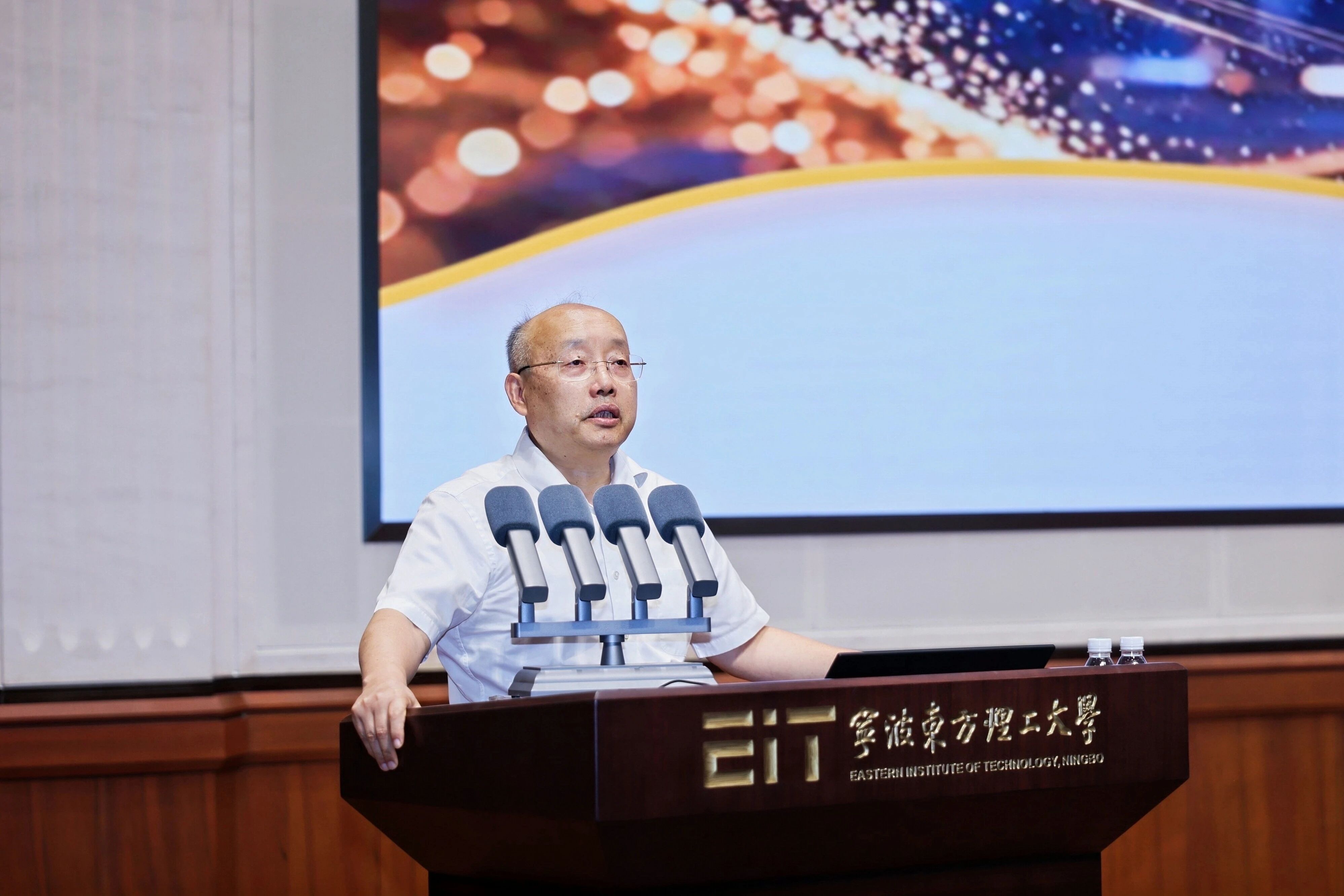
In addition, ZHOU Guohui opened the EIT Lecture Series with a talk titled “Some Thoughts on Zheshang and Zheshang Studies — and on University Reform in the AI Era”.
Why the Observation Post is at EIT Shenzhou Business School
The observation post is placed at EIT Shenzhou Business School because of where the School sits — at the junction of industry and academia. On one side is the industrial frontline of Zhejiang entrepreneurs; on the other, the knowledge production of a university. From here the think tank’s research reach extends to the meeting point of running a school and running a business: tracking the technological, talent and globalisation variables of new-quality growth, bringing companies’ real problems back into research, and sending research findings back into the classroom.
With the observation post as a link, EIT Shenzhou Business School and the Institute will carry out regular cooperation in research projects, case development and talent cultivation, turning the academic resources of Zheshang studies and the practical wisdom of Zhejiang entrepreneurs into courses and cases. For the School, the plaque is both recognition and a new question: how to turn Zheshang practice into knowledge that can be taught, discussed and used.
That question is to be answered in the classroom.