


From 19 to 22 October, the 2026 Annual Conference of the Financial Street Forum was held in Beijing’s Financial Street. Approved by the State Council, the conference was co-hosted by the Beijing Municipal Government, the People’s Bank of China and four other institutions, under the theme “Openness, Cooperation and Inclusiveness: Building a New Ecosystem for Global Financial Development”.
On 21 October, the conference’s FinTech Conference hosted the forum “New Quality Productive Forces, New Global Opportunities: Finance and Technology Empowering Enterprise Innovation”, organised by the Beijing Frontier Institute of Regulation and Supervision Technology (FIRST).
BEN Shenglin, Chair Professor of the Eastern Institute of Technology, Ningbo (EIT) and Dean of EIT Shenzhou Business School, released the Global FinTech Hub Report 2026 in his capacity as founding president of FIRST. The report was jointly published by FIRST, the Academy of Internet Finance at Zhejiang University, the Zhejiang International Base for Science and Technology Exchange in FinTech and Big Data Analysis (ZIBSciTechX), and EIT Shenzhou Business School. Its sample covers 500 representative fintech companies across 160 cities in 58 countries and regions.
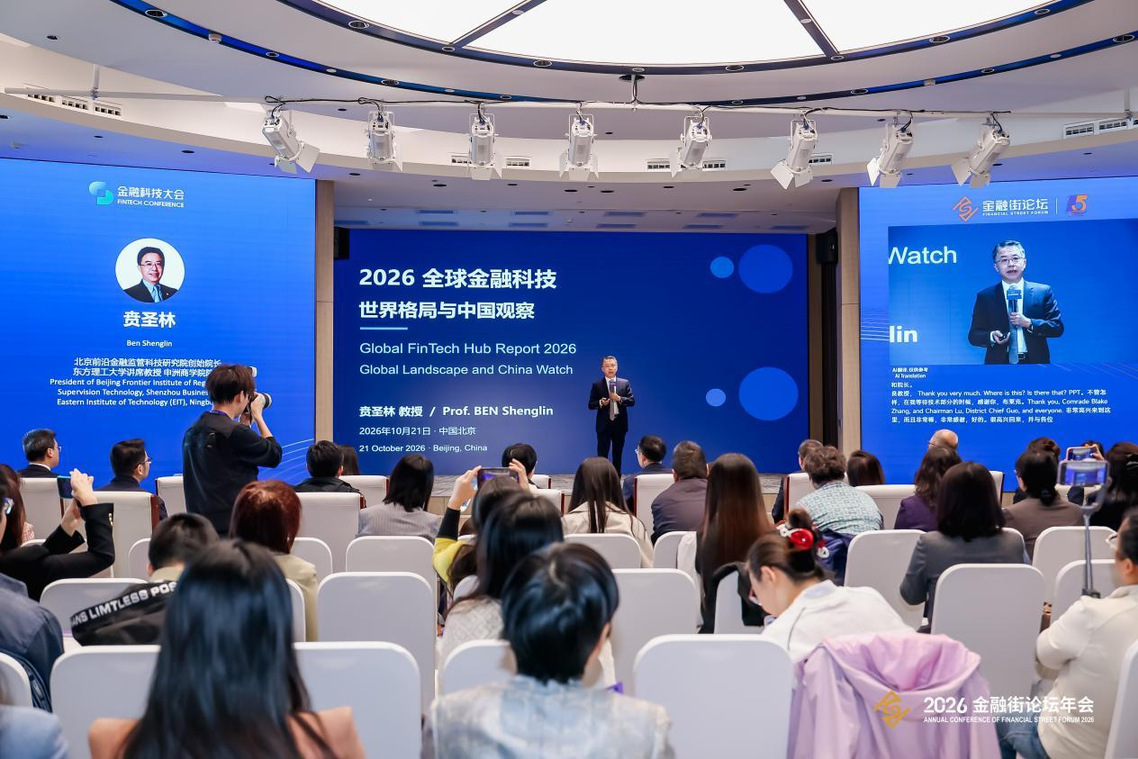 BEN Shenglin at the 2026 Financial Street Forum
Ten years: from ranking to observation
“This is the tenth consecutive year the report has been published, and it marks a major shift in methodology,” Ben said. The report has moved from index-based ranking to city observation: using 500 representative companies as “probes”, it tracks where fintech activity clusters, divides and migrates. “We play down the ranking contest and look more closely at the industrial logic and the changing role of cities behind the rankings.”
What that observation yields is a map of the “Global FinTech 50”: ten comprehensive hubs, twenty specialised hubs and twenty regional growth hubs, spread across nine regions. Twenty-one of the fifty are in Asia, or 42 per cent. Beijing, Shanghai, Shenzhen, Hangzhou and Hong Kong are listed as comprehensive hubs; Hanoi, Gurugram, Warsaw, Austin, Miami, Cairo and Lagos are the seven cities that entered the list this year.
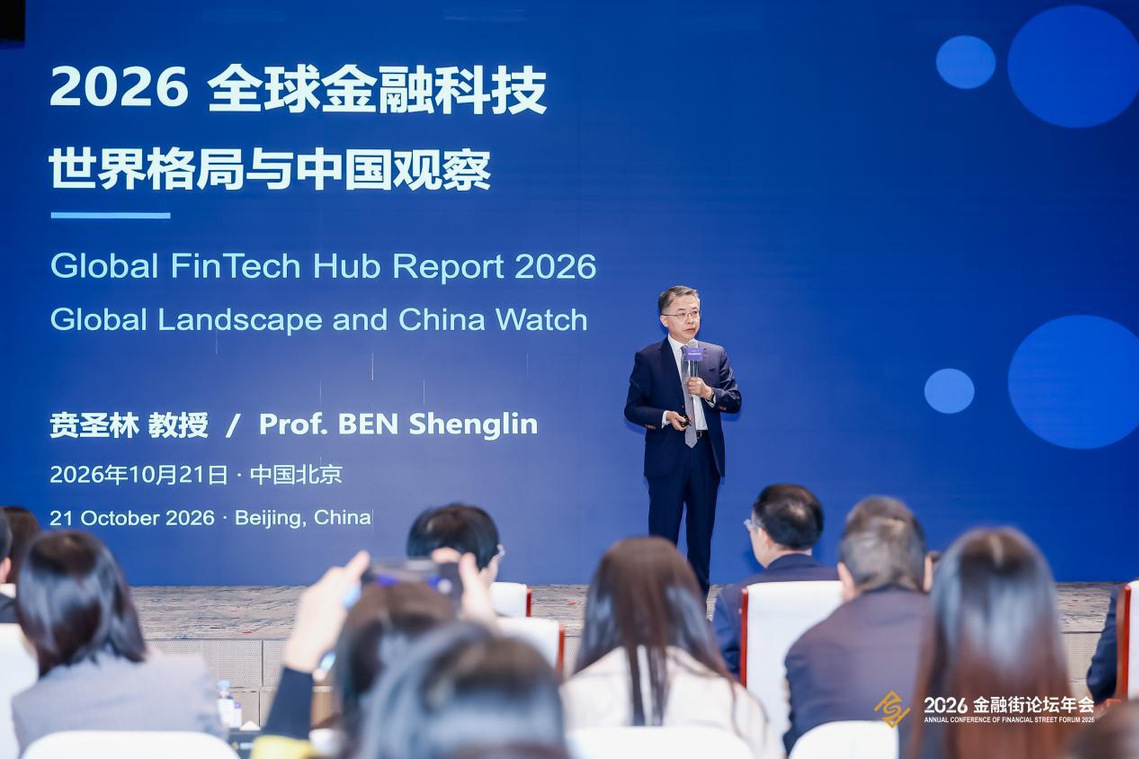
Releasing the Global FinTech Hub Report 2026
The five Chinese hubs differ not in rank but in function. Beijing links research, financial institutions and the application of regulatory technology; Shanghai stands out in financial markets, clearing and settlement, and cross-border services; Shenzhen is strong in the technical development and engineering delivery of digital banking; Hangzhou draws on digital commerce and small-business scenarios; Hong Kong connects international markets and professional services. Understanding China’s international competitiveness in fintech, the report argues, requires looking at how these five cities fit together.
The report also takes three payment infrastructures as observation windows: India’s Unified Payments Interface (UPI), Brazil’s Pix and China’s Cross-Border Interbank Payment System (CIPS). The first two serve retail instant payments, while CIPS handles cross-border wholesale clearing and settlement.
At the level of sectors, the report compares the development of eight major fintech sectors, with payments the most crowded of them. On that basis it sets out six trends: the coordinated development of super-hubs and specialised nodes; public financial infrastructure strengthening ecosystem connections; AI reshaping financial services; digital assets depending on credible rules and real use cases; the Global South forming a multi-node network; and digital banks shifting to the sustainability of inclusive services.
From these trends the report distils three paths for the internationalisation of Chinese fintech: exporting financial technology and operational capability; extending commercial payment and enterprise service networks; and developing public financial infrastructure and its supporting capabilities.
AI in finance: catch up on the basics before speeding up
“What AI in finance lacks right now is not heat but fundamentals — China’s use of AI in finance is still at an early stage,” Ben said. “Banks, insurers and other licensed institutions no longer treat AI as an experiment; they have put it at the level of strategy. But in reality many institutions skip the earlier steps: the groundwork of digitalisation and informatisation is not yet done, and they rush straight into AI.”
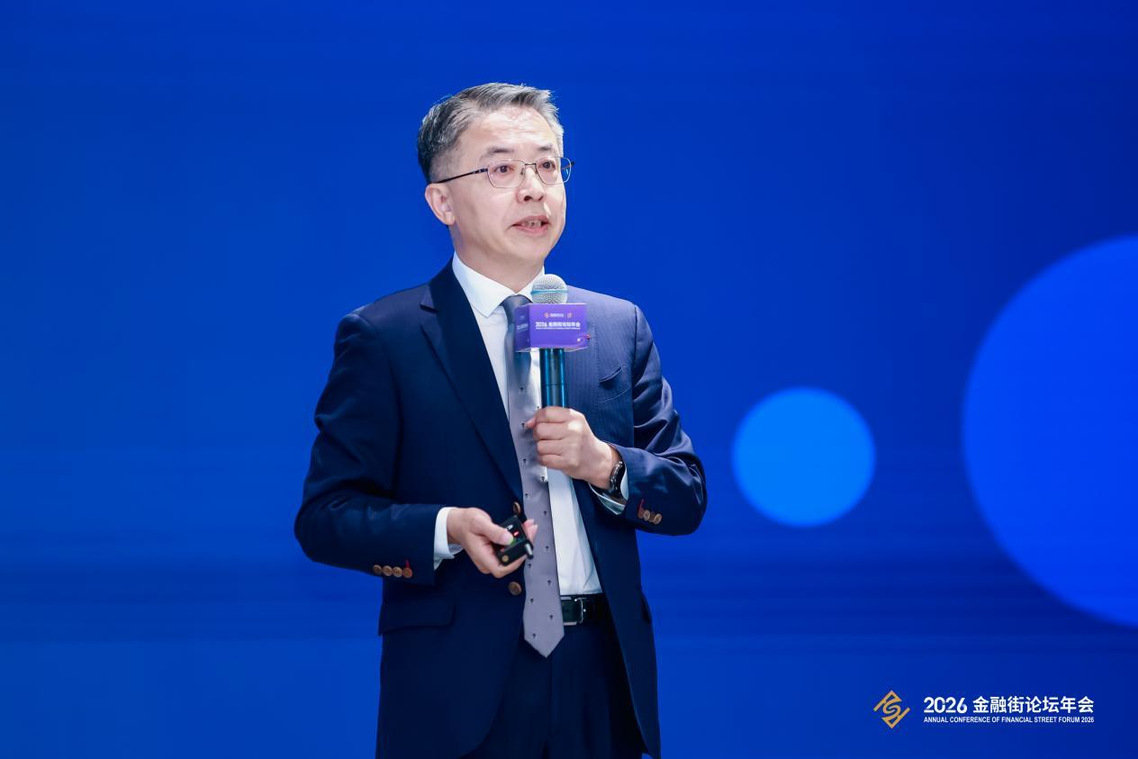
Ben presenting the report’s findings
In his view, intelligentisation follows a progression: standardisation, informatisation, digitalisation and only then intelligentisation. “If the basic shortcomings are not addressed and AI models are piled on top, problems are inevitable.” Institutions differ in their endowments, and accumulated gaps take time to close.
More computing power is not automatically better either. “For businesses involving the safety of funds — an elderly person’s transfer, for example — you need to build in a buffer to prevent mistakes. High-frequency quantitative trading in the secondary equity market is not a case for simply piling on computing power either. It should go instead to inclusive-finance scenarios such as micro-credit and payments.”
On innovation and security, he sees the key in upgrading regulators’ capacity and their way of thinking: developing regulatory technology and moving supervision from investigating risk after the fact to anticipating it. This year’s conference put forward “full-scenario supervision of financial behaviour” — supervision that no longer stops at licensed institutions but covers any financial behaviour wherever it occurs.
Three “T”s for going global
“Many people assume that going global is about technology, but technology is not our biggest weakness.” Ben reduces the challenge to three “T”s: Technology, Trust and Talent. Technology is only the foundation; winning the trust of local communities and completing localisation matter more. Local talent, he says, is the biggest gap of all.
On market sequencing, he judges that Indonesia, Thailand and Vietnam are geographically close and make the first stop; Brazil and the Middle East deserve attention; Africa also holds opportunities, with Egypt’s population above 100 million and Nigeria a substantial market — the report also observes Cairo and Lagos.
He also notes a pattern: technology service providers often go global ahead of licensed financial institutions. Licensed institutions need approval from both domestic and overseas regulators, which raises the threshold; technology companies, which do not run financial businesses themselves, can export technology and empower local licensed institutions abroad.
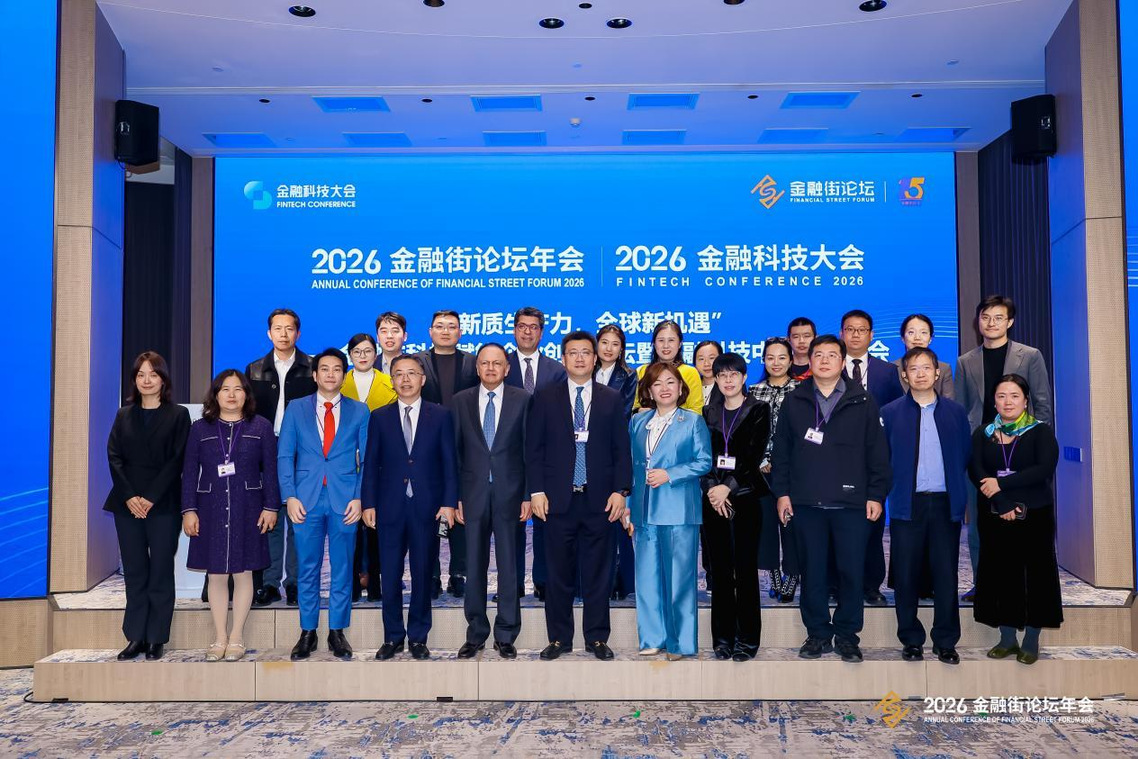
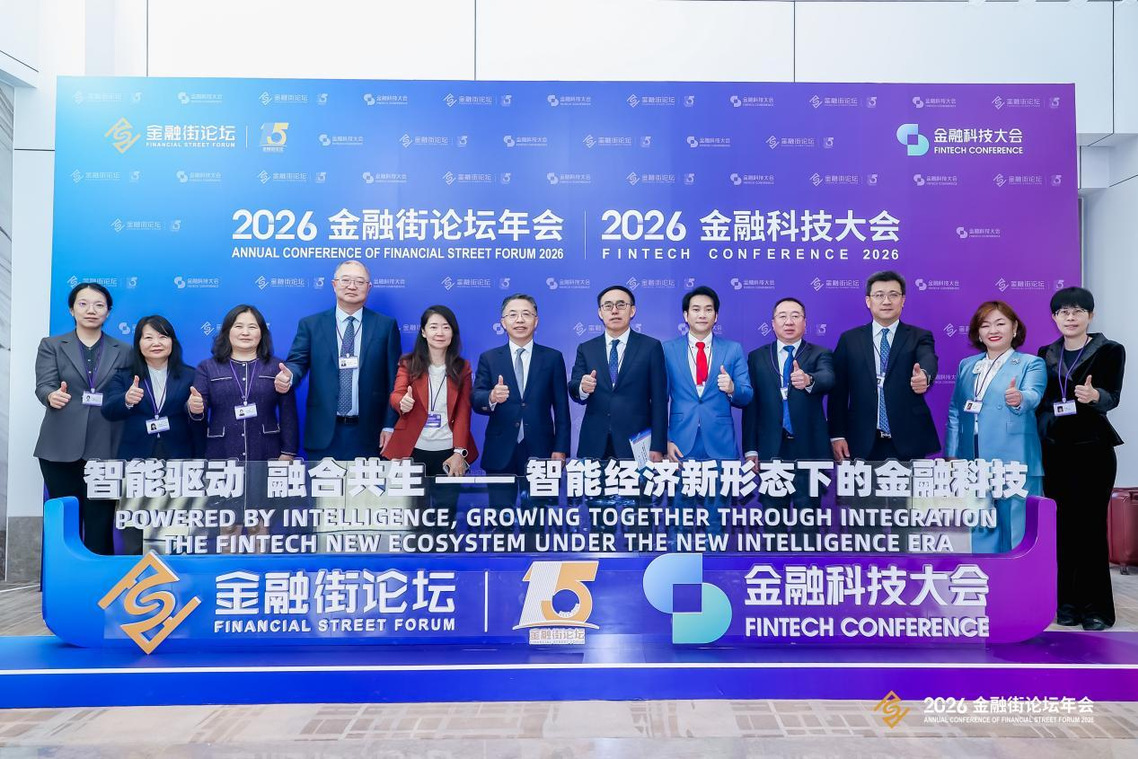
Group photo at the 2026 Financial Street Forum
Further coverage of the interview appeared in CCTV.com, CGTN, China Business Journal, Dahe.cn and Beijing Business Today.
From 50 cities to a classroom
Research, taken far enough, and teaching are two sides of the same thing: first see the field clearly, then explain it clearly. For EIT Shenzhou Business School, the Financial Street Forum left behind not a moment of exposure but a confirmation. Positioned as “AI-native” and serving the globalisation of Chinese enterprises, the School is doing the same work — turning the industrial frontline into research samples; and the report, in reducing the fintech activity of 50 cities and 500 companies to comparable, traceable threads, used the same method. City, sector and company form a three-tier syllabus: cities show clustering, sectors show divergence, companies show the path.
The map of global fintech thereby becomes knowledge that can be taught, discussed and used in the classroom.